

What Documentary Productions Need From a Location That Drama Doesn't
12th of Oct, 2026.
THE FIVE WORRIES THAT STOP GREAT LOCATIONS FROM EVER BEING LISTED
Key Takeaways:
Most hesitation happens before the enquiry, not after. The properties we never hear about usually aren't ruled out by production — they're ruled out by their owners, in advance, for reasons that often don't hold up.
The worst-case scenarios owners picture rarely match what actually happens. Crew sizes, shoot lengths and disruption are almost always smaller and shorter than people assume.
Every genuine risk has a standard answer. Insurance, condition reports and clear scheduling exist precisely to cover the things owners worry about.
The Properties We Never Get to See
Somewhere out there is a beautiful Victorian terrace with the kind of original cornicing a period drama would kill for, and its owner has never once thought about listing it — because somewhere along the way, they decided filming would mean chaos, strangers, and a wrecked home. We hear versions of this hesitation constantly, usually secondhand, from friends of friends who "thought about it once." The properties that actually get booked aren't necessarily grander than the ones sitting on the sidelines. They're just owned by people whose worries got answered before they talked themselves out of it.

St. James Norlands Church, a film location in London.
Myth: A Film Crew Means Dozens of People in Your House
Reality: crew size depends entirely on production type, and most location shoots are far leaner than people picture. A stills shoot or a small commercial might involve six to ten people total, including the photographer or director. Even a drama unit, which is larger, works in defined zones — camera and talent in the rooms being filmed, everyone else in a designated base area (often outdoors, in vehicles, or in a single holding room you agree in advance). Who actually needs to be inside my home? is a fair question to ask before anyone arrives, and a professional production will answer it precisely.
Myth: It'll Take Over My Whole Week
Reality: most bookings are a single day, sometimes a half day for stills or a quick commercial pickup. Multi-day shoots exist, but they're the exception and they're always flagged clearly at the booking stage, never sprung on you after the fact. Setup and breakdown ("rig" and "de-rig") can add time either side of the actual filming, which is exactly why a contract should state call time and wrap time rather than leaving it loose.
Myth: Something Will Get Damaged and I'll Be Left Covering It
Reality: this is the worry we hear most often, and it's also the one with the clearest answer. Legitimate productions carry public liability insurance, and a proper booking includes a condition report or photos taken before filming starts, so there's a factual baseline if anything does need resolving afterwards. Damage to a well-run location is genuinely rare — crews who want repeat bookings have every incentive to leave a property better than they found it, not worse.
Myth: Letting Strangers Into My Home Is Inherently Risky
Reality: productions aren't anonymous. A real booking comes with a named production company, a point of contact, and — when it's arranged through a broker — someone who's already vetted the shoot before it reaches your door. Ask who's coordinating on the day, how many people will be on site, and what identification or sign-in process is in place. Those answers tell you far more than a gut feeling about "strangers."
Myth: My Home Isn't Special Enough to Interest Anyone
Reality: scouts aren't only looking for grand or unusual properties. An ordinary 1990s semi, a plain office interior, or a slightly dated kitchen can be exactly what a brief calls for — productions need the ordinary as often as the extraordinary, because stories are mostly set in ordinary places. Undervaluing a property is just as common a reason it never gets listed as overvaluing one.
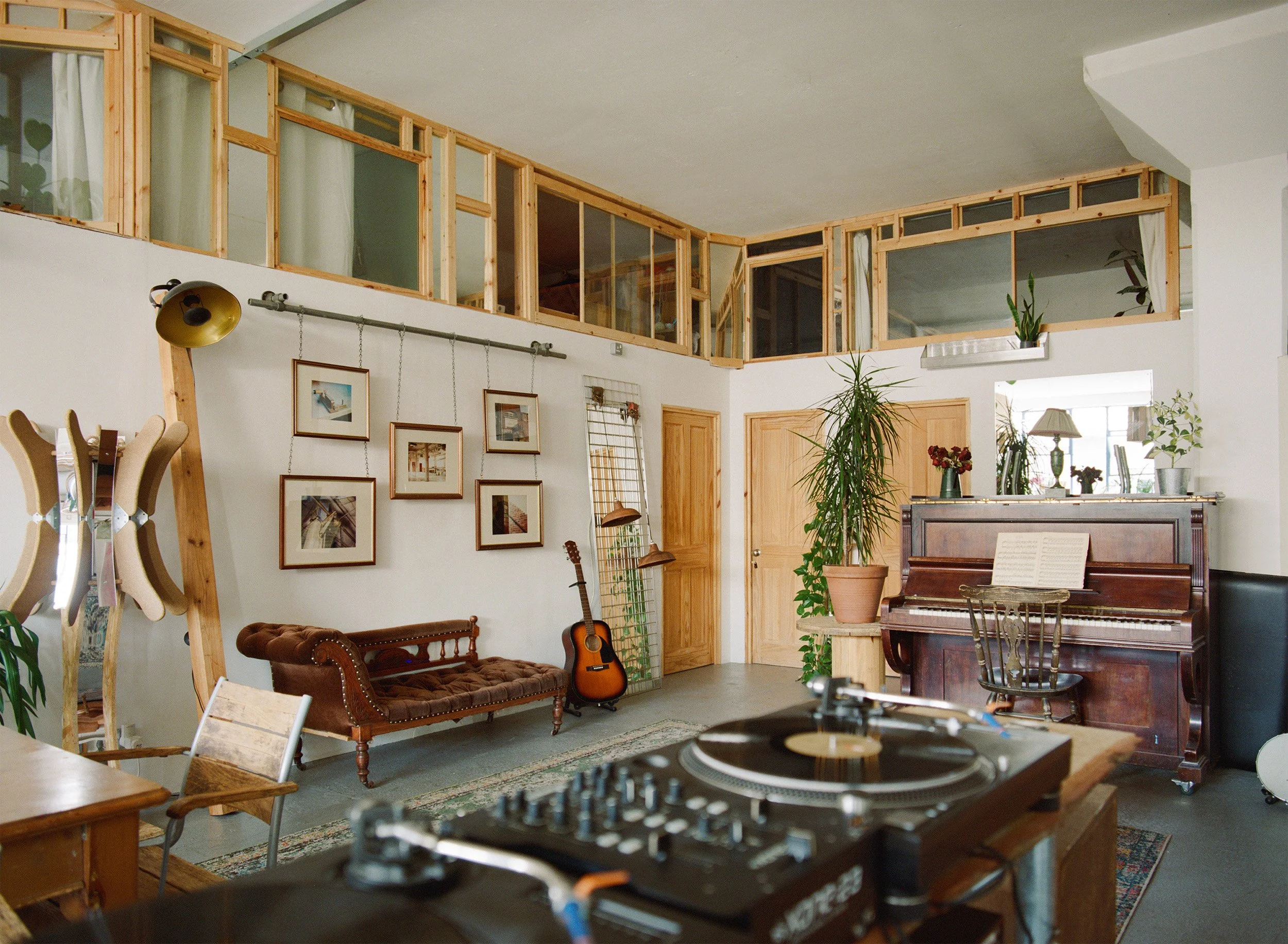
Oslo Nine, a film location in London.
What's Actually Worth Worrying About
None of this means filming is risk-free, and a healthy dose of caution is sensible. The genuine things to check before agreeing to any shoot:
Who is the production company, and can they confirm public liability cover?
What's the realistic call time and wrap time, in writing?
Who's your point of contact if something comes up during the day?
Is there a condition report or set of photos taken before anything moves?
These are quick to ask and quick for a legitimate production to answer. If a production can't or won't answer them, that's useful information too.
Why This Matters to Us
We'd rather talk a nervous owner through exactly what a shoot day looks like than have a brilliant location sit unlisted because of a worry that wouldn't have survived one honest conversation. Every property we represent started with someone deciding the upside was worth a few straightforward questions.
Curious What Your Property Could Be Worth to a Production?
If you've been on the fence about listing your home, office or outdoor space, the easiest first step is a conversation, not a commitment. Tell us about your property and we'll talk you through what to expect, worry by worry.