

The Recce is Where Most Locations are Won or Lost
2nd of Nov, 2026.
THE RECCE IS WHERE MOST LOCATIONS ARE WON OR LOST
Key Takeaways:
A recce is a diagnosis, not a viewing. We're not there to admire a kitchen — we're there to find the one thing that will cause a problem on shoot day, before it becomes the production's problem instead of ours.
Most locations fail on access, not aesthetics. Parking, power, floor loading and neighbours end more bookings than a room that photographs the wrong way.
The recce protects the owner as much as the production. Every question we ask on site is one less surprise for the family or business that has to live through the shoot.
Three people stood in a hallway in Clapham at 9am on a Tuesday, and none of them had looked at the paint colour yet. The director of photography was timing the light through the landing window with his phone. The location manager was counting paces from the front door to the nearest parking bay. I was on my knees by the fuse box, working out whether the house could take a generator feed or whether we'd need our own. Forty minutes later we knew more about that property than the owner's own estate agent did — and we still hadn't discussed whether anyone liked the sofa.
That's what a recce actually is. Not a viewing. A diagnosis.
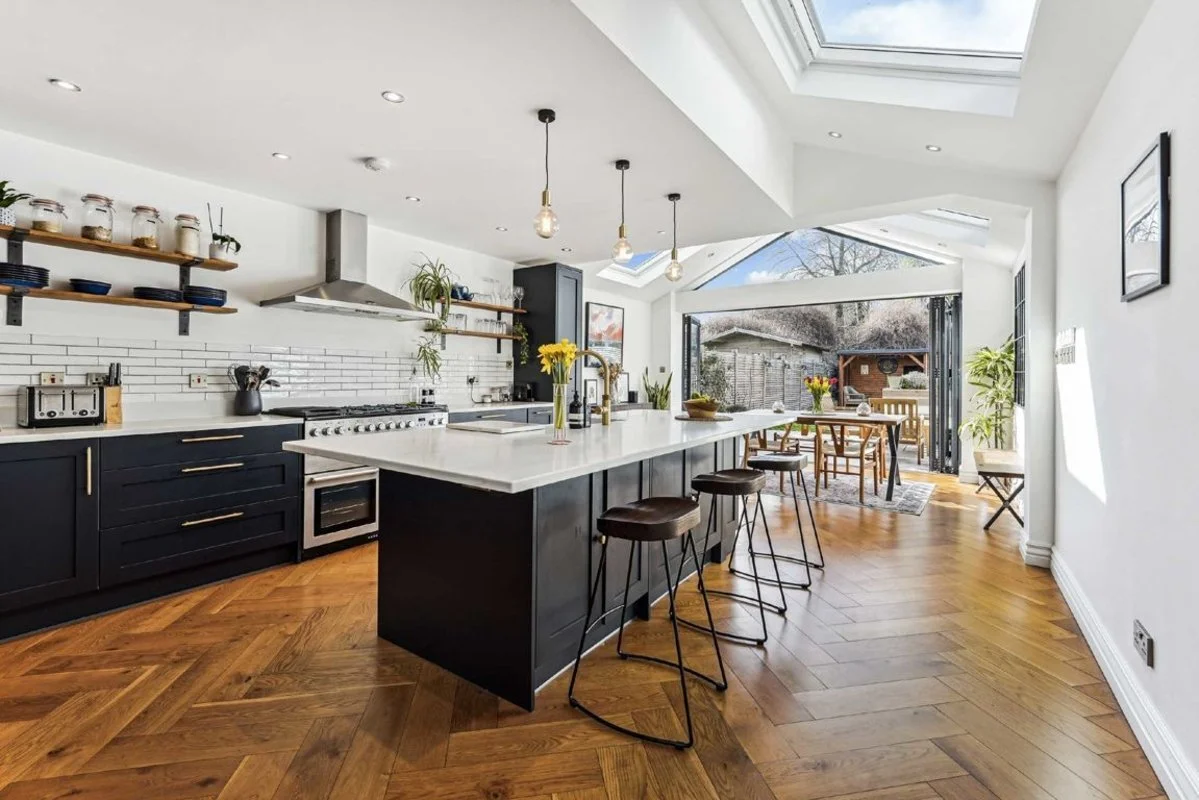
Tooting Townhouse, a film location in London.
What the Brief Didn't Tell Us
A brief tells us what a production wants. It almost never tells us what will go wrong. A script says "Georgian townhouse, period detail, quiet street." It doesn't say the quiet street has permit parking that resets at 8am, or that the period detail includes a staircase too narrow for a dolly, or that the neighbour on the party wall works nights and sleeps through the afternoon. We find those things out by standing in the space with the people who'll actually have to solve them — the 1st AD, the gaffer, sometimes the production designer — not by reading the listing again.
Light, Power and Noise — In That Order
Every recce we run moves through the same three problems before anything else gets discussed, because these are the three things that end a shoot early if they're wrong:
Where the light actually falls at the hour the scene will shoot, not the hour we happen to be visiting
Whether the existing supply can take the rig, or where a generator would sit and how the cable run gets there without crossing a doorway
What the property sounds like on an ordinary weekday — road noise, flight paths, a school run, a building site two doors down
Get those three wrong and no amount of set dressing saves the day. Get them right and almost everything else is negotiable.
The Questions That Decide a Yes or No
By the time we leave, we're answering a short list that has nothing to do with how the location looks in a photograph:
Can a crew of fifteen actually move through this space without emptying three rooms of furniture?
Is there a loading route that doesn't go through someone's bedroom?
Does the property have one exit or two, and does that change what we can film at all?
What's the latest this street tolerates a generator running before someone calls it in?
These are the questions that separate a location that looks right from one that works on the day — and they're the reason we'd rather lose a booking at the recce stage than lose it on set.
When a Location Looks Perfect and Isn't
We once recced a warehouse that photographed like a dream — raw brick, huge north-facing windows, exactly the brief. It had a single staircase, no lift, and a neighbouring tenant running a working print shop with a compressor that cycled on every four minutes. On camera, inaudible. On a boom mic three feet away, it ruined every take. The listing photos never showed that, and they never would have. Only standing in the room with sound rolling told us.

Wisteria House, a film location in London.
What We're Protecting the Owner From
The recce isn't only about what the production needs — it's where you work out what the shoot will actually cost you in disruption. If a scene calls for rain rigs on the roof, the owner needs to know now, not on the morning the tankers arrive. If the schedule means a crew in the house for three consecutive days rather than one, that changes what we quote and what we warn them to expect. A good recce means nobody — owner or production — gets a surprise they didn't agree to.
Why the Recce Is Never Wasted Time
Sometimes a recce ends in a no, and that's not a failed visit — it's the system working. A location manager who's seen us rule out two properties on sound and access trusts the third one we send far more than if we'd just forwarded every listing that matched the brief on paper. The time spent standing in a hallway with a tape measure is the reason the shortlist that follows is short for the right reasons.
Got a Recce Coming Up?
If you're sourcing for a shoot and want a broker who'll walk the space with you rather than just hand over an address, tell us what the brief actually needs and we'll go from there.