
FILM LOCATIONS: EUPHORIA SEASON THREE

Film Locations: Euphoria Season Three
4th of May, 2025.
Film Locations: Euphoria season three
Key Takeaways:
Euphoria Season 3 expands into a multi-territory, film-ready location strategy driven by narrative scale and visual tone
With storylines spanning the US, Mexico and international cities, production has shifted towards diverse, high-impact filming locations that support a more mature, cinematic and globally fragmented narrative. This reflects growing demand for versatile locations that can double, transform and scale across multiple environments.Controlled studio environments combined with adaptable real-world locations remain critical for complex productions
From major studio builds to transformed urban streets, the series demonstrates how high-end television relies on a blend of sound stages, backlots and location dressing to achieve ambitious storytelling while maintaining production efficiency and control.After years of delays and production disruption, including the impact of COVID-19 and wider industry challenges, Euphoria returns with a third season that feels markedly different in both tone and execution.
Originally adapted from the Israeli series by Ron Leshem and Daphna Levin, and developed for HBO by Sam Levinson, the show has evolved beyond its high school setting into something far broader in scope.
Season three introduces a five-year time jump, separating its core characters geographically and emotionally. This narrative decision has a direct impact on location — pushing the production into a far more expansive and varied set of environments.

Oslo Nine, London warehouse film location.
From Suburban Drama to Western Noir
One of the most notable creative shifts in season three is its movement toward a Western noir-inspired aesthetic.
This is particularly evident in Rue’s storyline, which unfolds across border towns, desert landscapes and more transient, lawless-feeling environments. The visual language leans into:
Open, sun-bleached landscapes
Dusty roads and remote settings
Stark contrasts between isolation and intensity
The result is a departure from the neon-soaked suburban intimacy of earlier seasons, into something that feels more cinematic, sparse and geographically untethered.
For location scouts and production designers, this signals a clear trend: tone is increasingly driving location selection, with environments acting as extensions of character psychology.
California as the Production Backbone
Despite its global footprint, much of the series is still anchored in Los Angeles County — a long-standing hub for high-end television production.
Studio work was carried out at Warner Bros. Studios, where controlled environments allowed for interior builds and repeatable shooting conditions. With extensive sound stages and backlot options, the studio continues to provide the flexibility required for complex productions.
Beyond the studio, various areas across Los Angeles were transformed to serve the narrative. Streets in places like Huntington Park were redressed to double as Mexican locations, demonstrating the continued importance of location adaptability and set dressing in modern production.
Specific, character-driven locations — such as small retail environments and community spaces — were also used to ground the story in realism, while still maintaining production control.
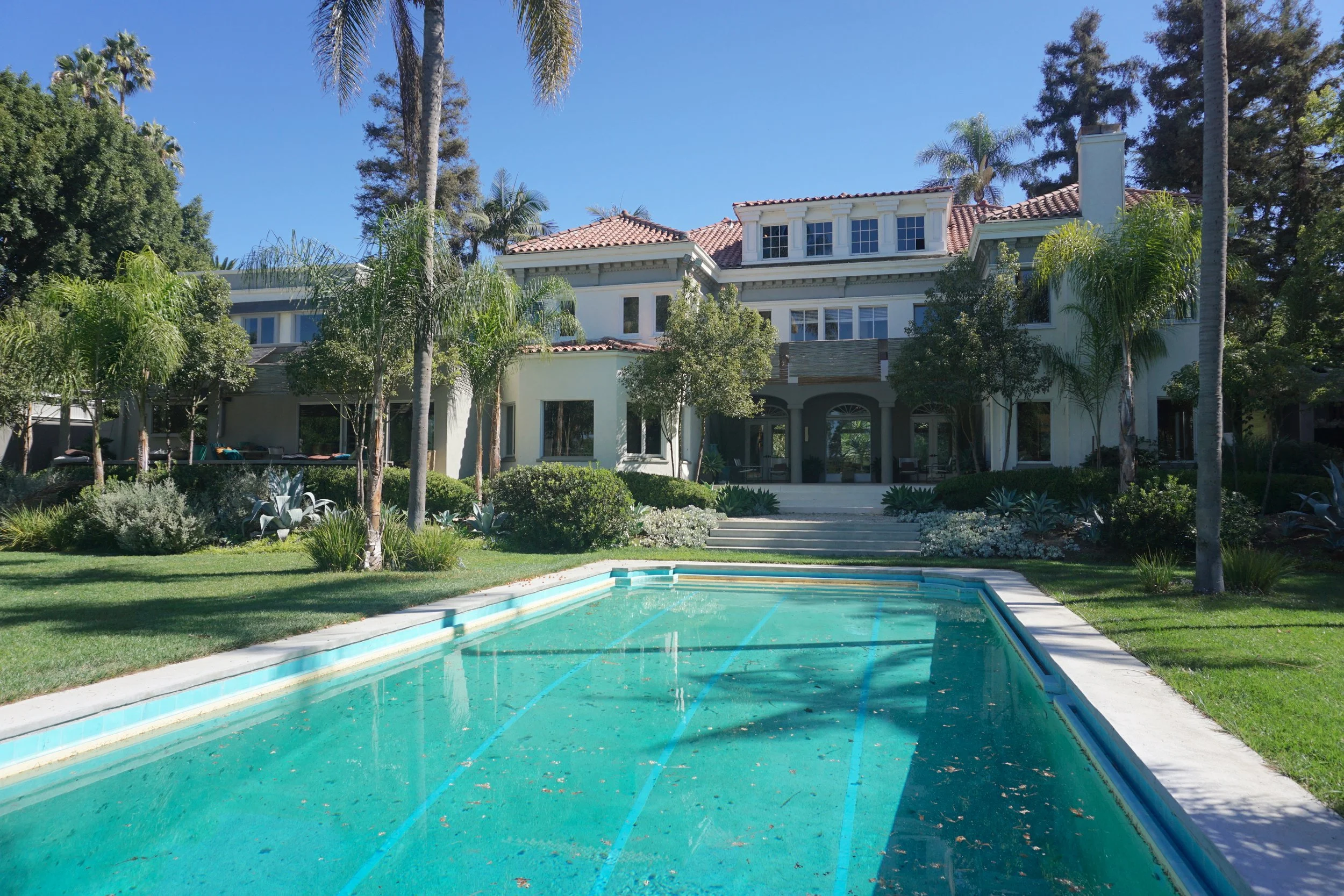
Oasis Hancock, a film location in California.
Building Mexico Without Leaving California
A key example of production efficiency is how the series recreated parts of Mexico within California.
Through signage changes, storefront redesign and environmental detailing, entire streets were repurposed to reflect cross-border settings. This approach allows productions to:
Maintain tighter control over filming conditions
Reduce travel and logistical complexity
Stay within established production infrastructure
At the same time, select sequences were filmed in real border locations such as Mexicali, adding authenticity where needed.
This hybrid model — combining real locations with doubles — is increasingly common in high-end television.

Mexican Ranch, a film location in Mexico.
A Global Footprint: Expanding the Visual World
Season three pushes beyond the US, incorporating additional filming across major international cities.
In New York City, urban density and real-world texture provide a contrast to the more open landscapes elsewhere in the series. Storylines tied to creative and professional pursuits benefit from the city’s recognisable energy.
Production also extended into London, utilising both practical locations and studio infrastructure at Warner Bros. Studios Leavesden — a facility known for its large-scale production capabilities and versatile backlot.
Additional sequences were filmed in:
Dublin, including historic interiors and character-driven spaces
Rome, offering architectural contrast and European tone
Singapore, where modern, high-density visuals bring a different global dimension
This multi-territory approach reflects a broader industry shift toward globally distributed storytelling, where locations are used to mirror character divergence and narrative scale.
Locations as a Reflection of Character
With each main character now on a separate path, locations play a more deliberate role in defining identity and progression.
Urban environments reflect ambition and professional growth
Suburban settings reinforce themes of constraint or illusion
Remote or border landscapes suggest instability, risk and reinvention
This reinforces a key industry principle: locations are no longer just settings — they are narrative devices.
Production Delays and Their Impact on Location
The long path to season three — shaped by COVID-19 delays, scheduling challenges and industry strikes — ultimately influenced both the scale and structure of the production.
Longer development time allowed for:
More ambitious location planning
Expanded filming geography
Greater alignment between story and setting
However, it also required a flexible approach to scouting, permitting and scheduling — particularly when working across multiple countries.
For production companies and location managers, this highlights the importance of adaptable location strategies in an unpredictable production landscape.
For location managers, scouts and production companies, Euphoria Season 3 is a clear example of how narrative ambition is directly shaping location strategy at scale. As productions become more geographically fragmented and visually specific, the demand for versatile, film-ready locations continues to grow.
If you are a location owner or production professional looking to position your space for high-end TV and film, now is the time to ensure your location is visible, accurately presented and production-ready.