
Shooting in Winter: What Short Days, Cold Houses and Wet Ground Ask of a Location
23rd of Nov, 2026.
SHOOTING IN WINTER: WHAT SHORT DAYS, COLD HOUSES AND WET GROUND ASK OF A LOCATION
Key Takeaways:
Around the shortest day, southern England gets under eight hours of daylight. Every hour lost to travel, setup or a cold start is an hour the schedule can't win back.
A good winter location solves practical problems first: rooms that can be lit to read as day, heat that copes with doors opening all day, enough power, and hard ground for the trucks.
The best winter bookings are planned around the base as much as the set. A unit base on hard standing, close to the door, saves more time in December than almost anything else.
A summer shoot can absorb a slow morning. A December shoot can't. By the time the trucks are parked, the kit is in and the first shot is lit, the light outside is already turning, and by half past three it's gone. In winter, every weakness in a location costs more.
That's why winter briefs need a slightly different set of questions. The look still matters, but so does the house that stays warm with the front door propped open, the field that doesn't turn to mud under a generator, and the base that's a short walk from set rather than a shuttle ride away.
The Day Is the First Thing You Lose
On 21 December, London gets roughly seven hours and fifty minutes between sunrise and sunset. Further north it's less. For any scene that needs natural daylight through the windows, or a genuine exterior, that's the whole window, and it shrinks further once you allow for the low winter sun dropping behind trees and buildings well before sunset.
So the first winter question is simple: how much of the day does this location give back? A property that needs an hour of unloading down a narrow lane, or a long walk from where the vehicles can park, eats into the only light there is. A location with easy access, a clear route for kit and parking at the door hands that hour back to the camera.2nd of Nov, 2026.
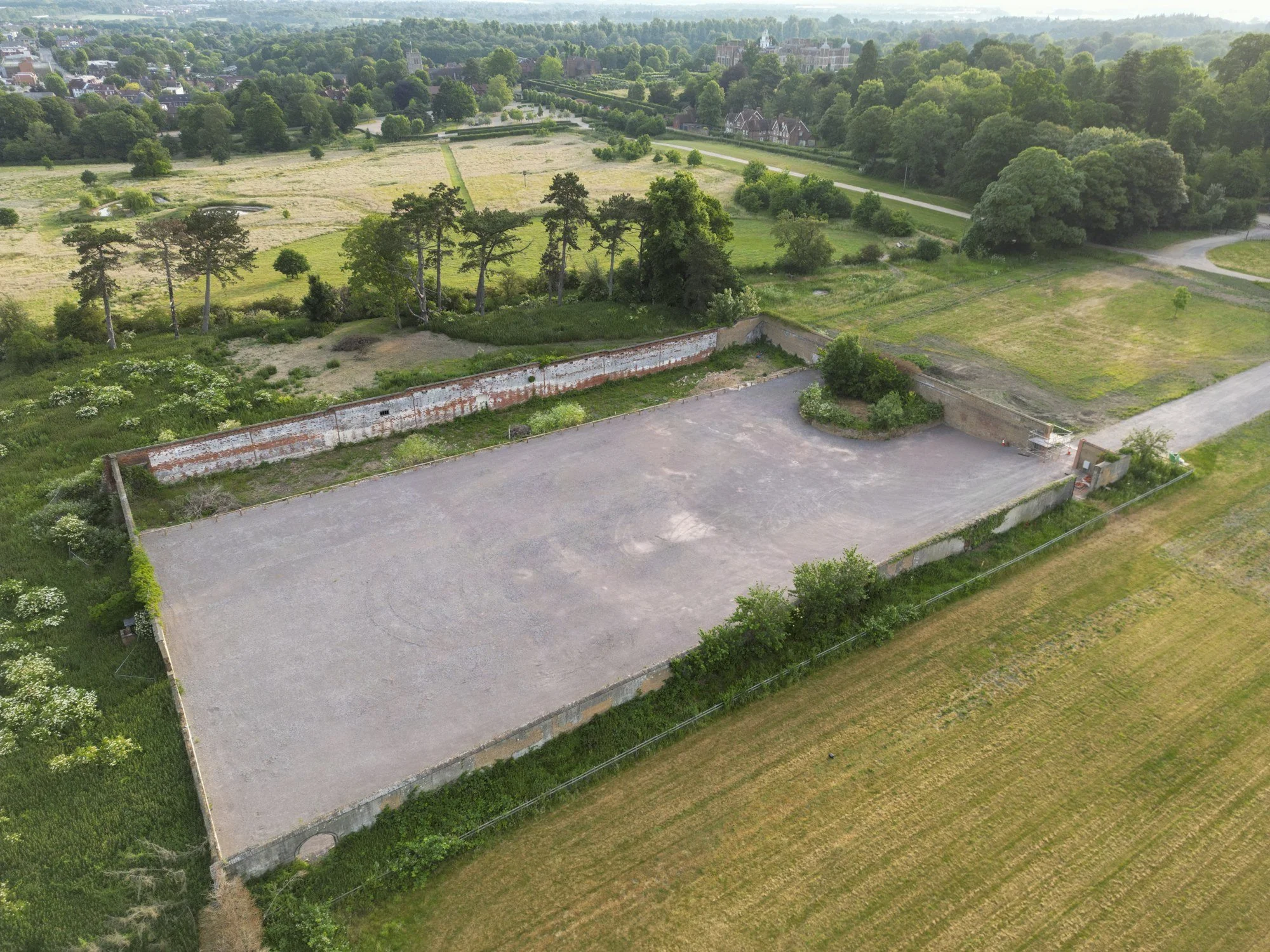
Great Northern Unit Base, a film location in Hertfordshire.
Interiors That Can Carry a Day Scene After Dark
Most winter schedules lean on interiors, and the useful ones are the rooms that can be lit to look like daytime long after the real day has ended. That means windows that can be lit from outside or blacked out cleanly, ceilings high enough to rig above the frame, and floor plans with space to hide lamps and crew behind the shot.
Period houses with tall sash windows and generous rooms tend to do this well. Small modern rooms with low ceilings and big glass walls are harder, because there's nowhere to put the light and the black outside shows in every reflection. If a script has day scenes that will be shot at four in the afternoon, ask early how each room behaves once the sun has gone.
A Warm House Is a Working House
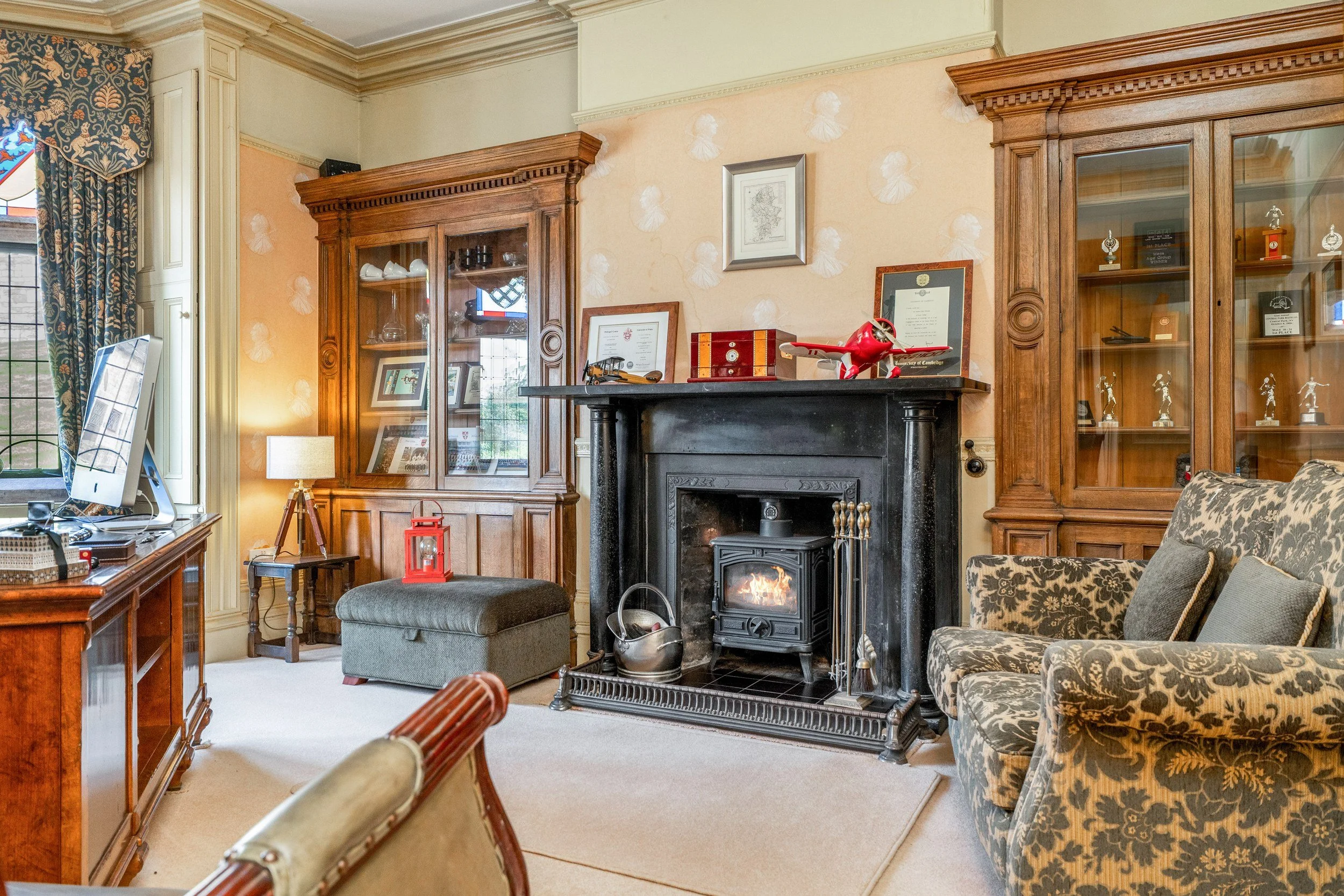
A crew of thirty going in and out of a front door all day will empty the heat from most homes by lunchtime. Cast in costume, especially summer costume shot in winter, need somewhere properly warm between takes. A house that can't hold its temperature slows everything down, from make-up to performance.
In winter, working fireplaces, wood burners and good heating decide whether a day is comfortable or long. Check too whether there's a warm holding room separate from set, so cast and crew aren't all crowding the one room that's being filmed.
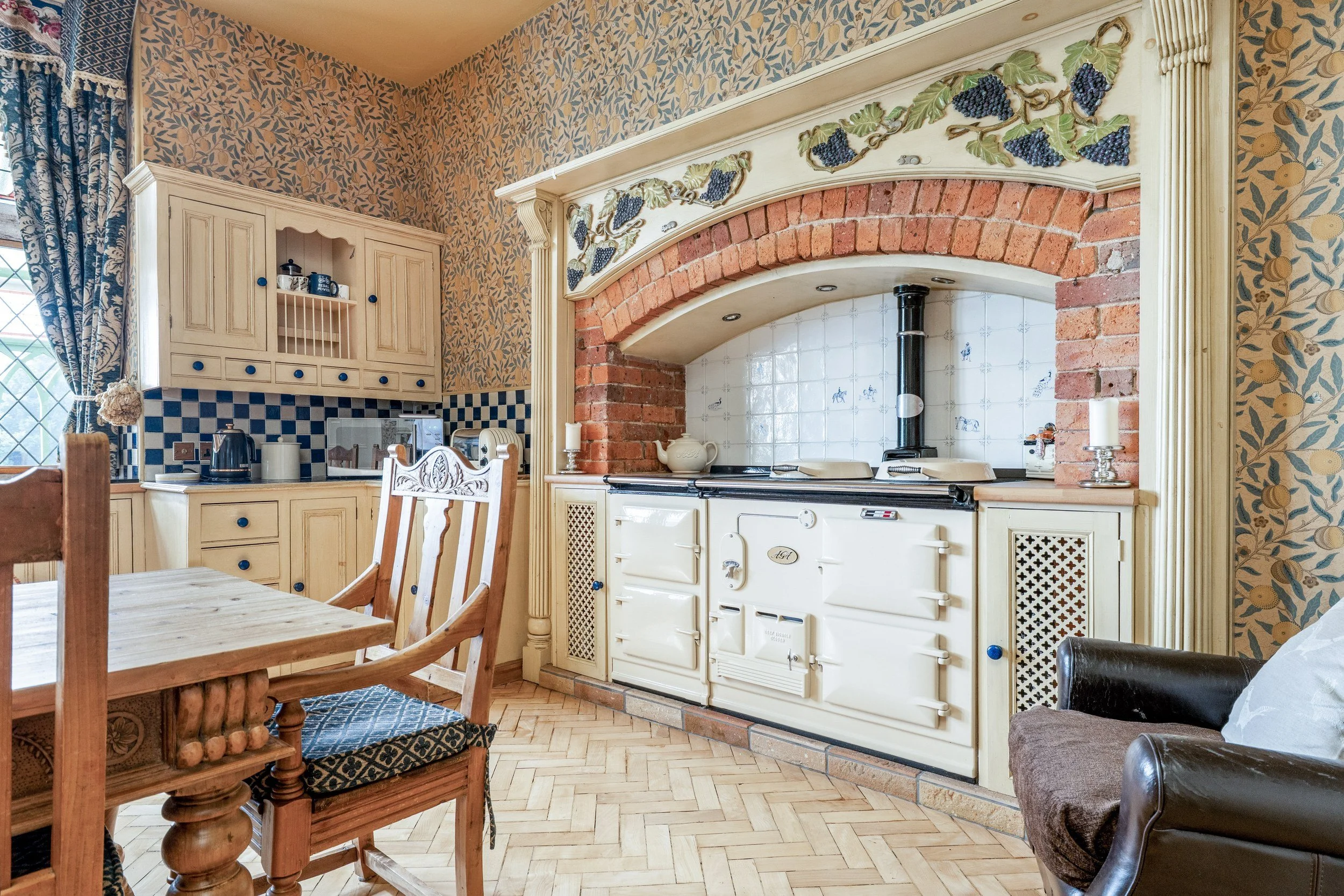
Moorlands Country House, a film location in Staffordshire.
Power, and Where It Comes From
Winter shoots use more power. Lamps are on for longer, heaters are running in holding areas, and the days start and end in the dark. A domestic supply rarely covers it, so most productions bring a generator, and that brings its own question: where does it go?
A generator needs a spot that's close enough to cable, far enough away not to be heard on sound, and on ground firm enough to take its weight. On a big estate that's usually easy. On a terraced street or a narrow country lane it needs planning, and sometimes a conversation with neighbours, before the day.
The Ground Under the Trucks
Grass that's perfect for parking in July can be a quagmire by November. Trucks, trailers and crew cars on soft ground mean trackway, and trackway means time, cost and a reinstatement conversation with the owner afterwards.
The simplest winter fix is hard standing. Some estates and dedicated unit bases are built for exactly this: surfaced, drained and sized for a full unit. At the Great Northern Unit Base in Hertfordshire, for example, the base itself is 80m by 50m of hard standing, while the grass overflow car park needs trackway from September to May. Knowing which part of a site works in winter, and which part only works in summer, is the kind of detail that should be settled at the recce, not on the morning of the shoot.
Keep the Base Close
In summer, a unit base ten minutes away is an inconvenience. In winter it's a real cost. Shuttling cast and kit back and forth in the dark and the rain adds time at both ends of a day that has none to spare.
In cities, the answer is often a dedicated base near the set. Wapping Unit Base sits opposite Tobacco Dock, just outside the Congestion Charge zone, with hard-standing space for small to medium units and access to locations across East London and the City. In the countryside it might be an estate with its own base, or a property with on-site accommodation, so cast and crew aren't driving dark, icy roads at six in the morning.
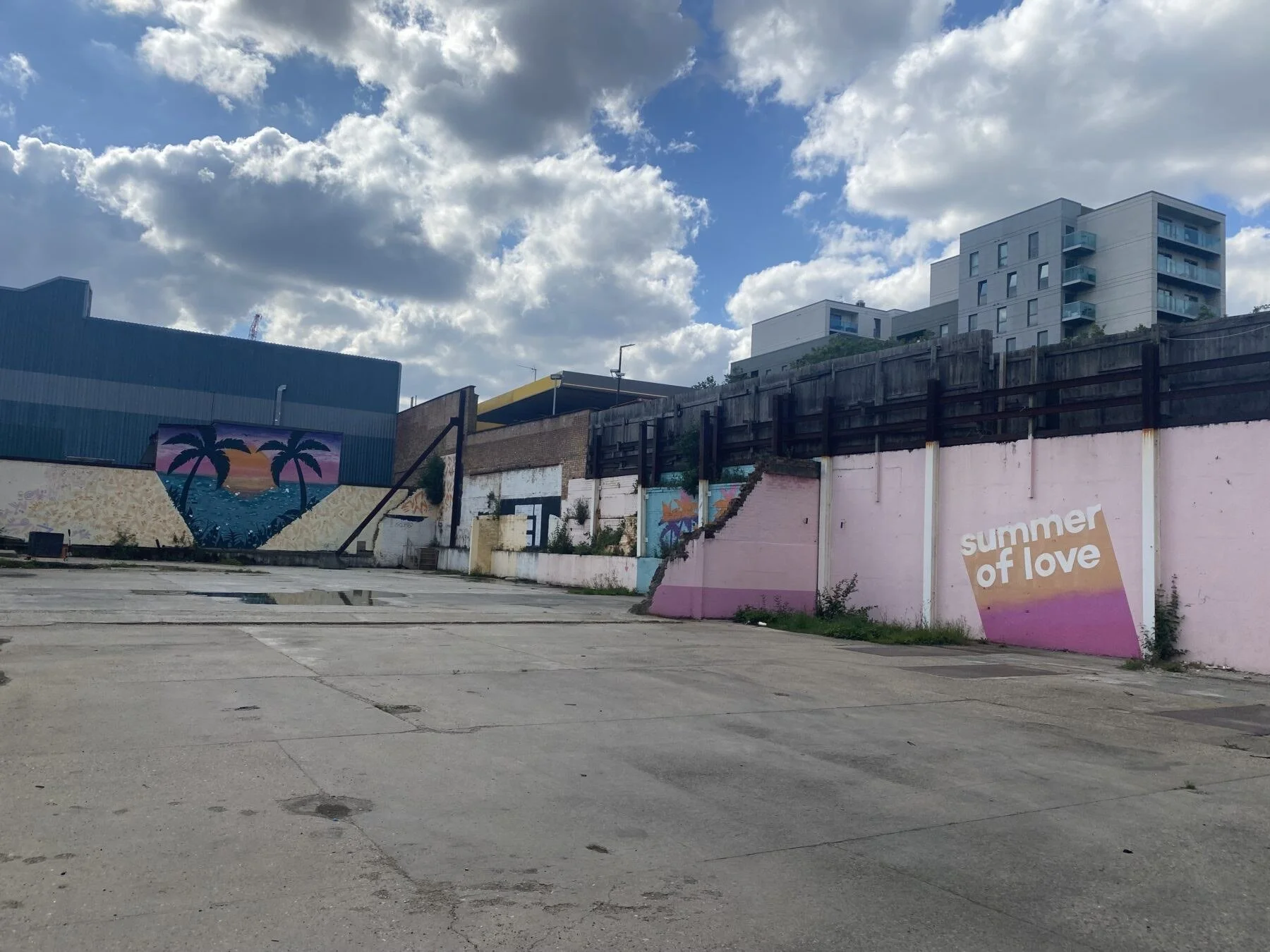
Wapping Unit Base, a film location in London.
What We Ask on a Winter Brief
When a winter brief lands with us, we add a few questions to the usual list:
How many day scenes are interior, and can any be shot after dark?
What's the latest the light can be used for the exteriors?
How big is the unit, and does it need hard standing?
Is there a warm, separate holding space for cast?
Where will the generator sit, and is the location quiet enough for sound?
How long is the walk or drive from base to set?
None of these are unusual questions. In winter they just matter more, and they're much easier to answer when we're shortlisting than when the crew is already on site.
Our View
Winter shooting rewards preparation more than any other season. The locations that work best between November and February tend to be the ones with easy access, warm rooms, firm ground and a base close by, so the short day goes on the shot, not the logistics.
If you're planning a shoot this winter, tell us about the schedule as well as the look. We'll shortlist properties that can handle both. Reach out here.
