
SCOTLAND, FRAME BY FRAME: WHY THE NORTH KEEPS PULLING PRODUCTIONS BACK
Scotland, Frame by Frame: Why The North Keeps Pulling Productions Back
15th of June, 2025.
SCOTLAND, FRAME BY FRAME: WHY THE NORTH KEEPS PULLING PRODUCTIONS BACK
A guest piece from our Scotland liaison, Zahra Noble-Sabokbar
Key Takeaways:
Scotland's biggest advantage isn't its beauty — it's its versatility — Productions return to Scotland because it can convincingly double for multiple locations within a very small geographic area. Coastal towns, rugged wilderness, historic cities, stately estates, remote islands and period streets can often be accessed from a single production base, reducing travel time, logistics and costs.
The light and daylight hours create real production value — From spring through autumn, Scotland offers exceptionally long shooting days, with usable daylight stretching from early morning to late evening. Combined with the country's distinctive soft northern light, productions gain more filming time, longer golden hours, and naturally cinematic conditions that are difficult to replicate elsewhere.
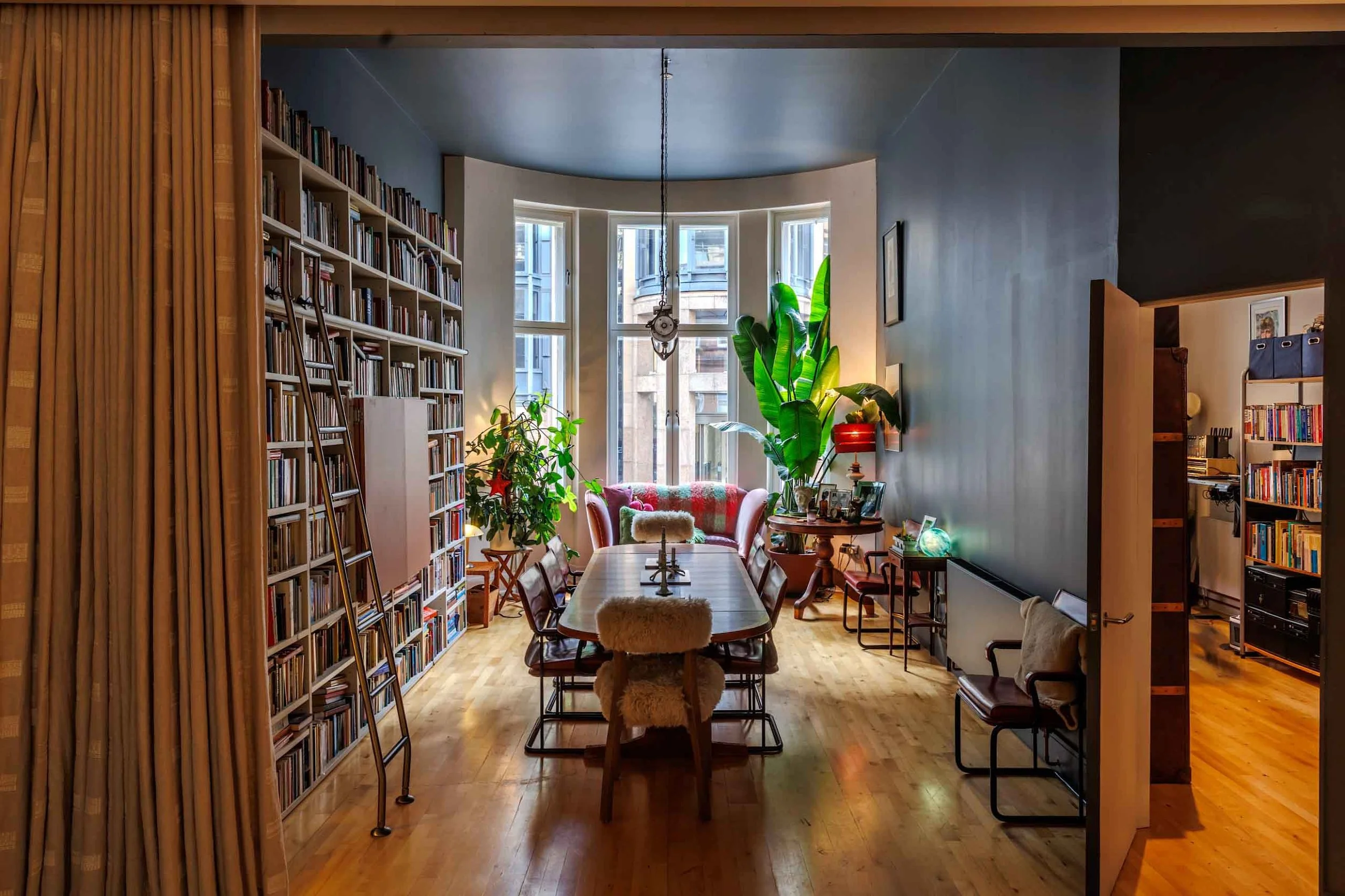
Midtown Loft, a film location in Glasgow.
The country that doubles for everywhere
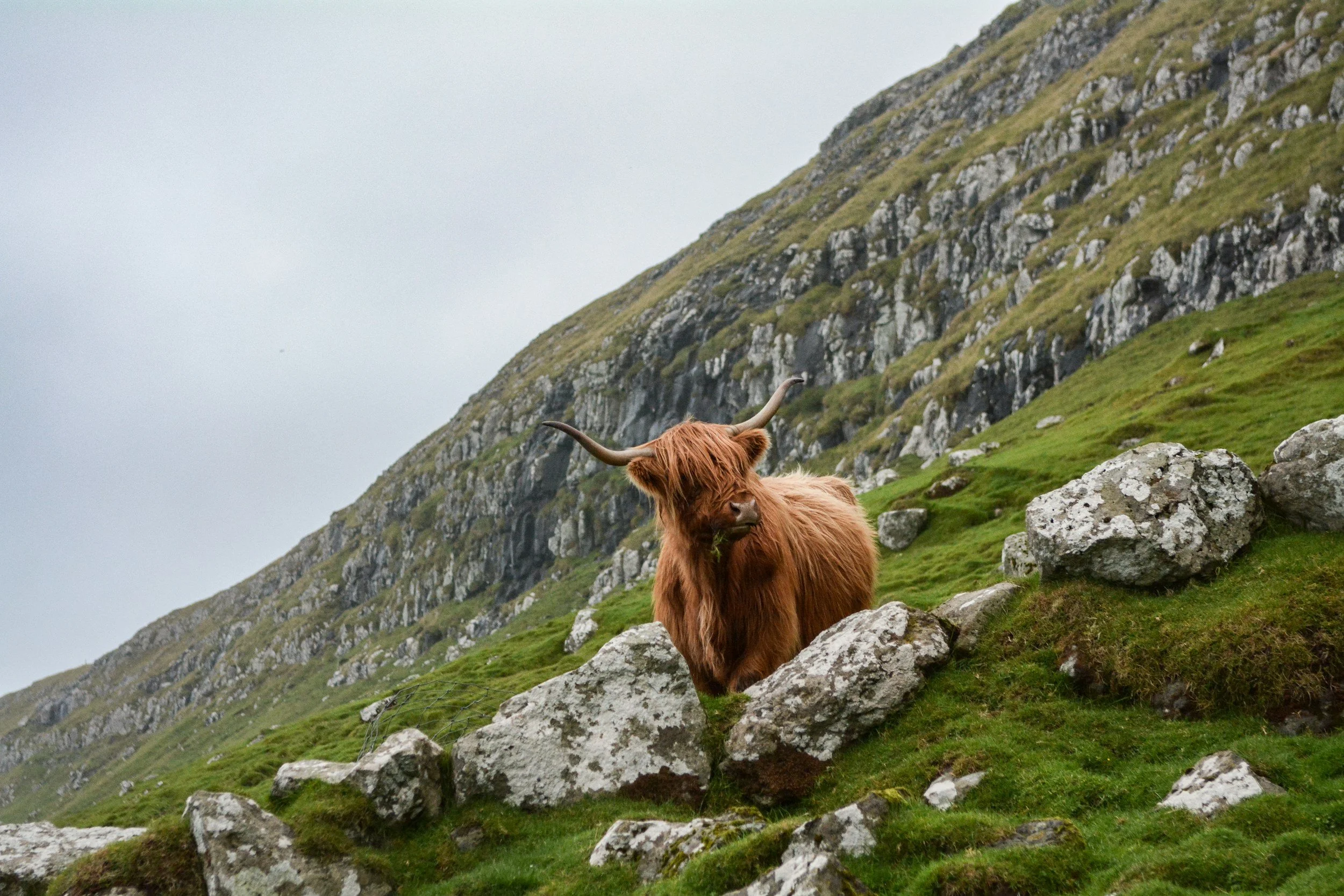
Most location work is an exercise in substitution — getting one place to convincingly stand in for another. Scotland is unusually generous about this, because the range of landscape packed into a short drive around our country is genuinely hard to find elsewhere in Europe.
You have sprawling private estates that read as old-world grandeur. Deserted beaches that could be almost anywhere. Cobbled streets that need no dressing to fall back a hundred or so years. Remote cabins by the sea, and on the islands, the kind of true isolation that a production usually has to fake at great expense — reachable, with planning, by a ferry crossing that is itself a sequence waiting to be shot. The breadth is the asset. You are rarely choosing between Scotland and somewhere else. You are choosing between several Scotlands, often within the same county - and usually just a short drive from one another.
That variety is what brings people back. A single base camp can serve a remote-wilderness day, an urban-period day, and a coastal day without anyone dealing with a logistical nightmare and relocating across the country.
A short case study in disguise
The clearest version of this I can offer is the building I know best — a restored 1785 landmark in Portobello on the Edinburgh coast, built from salvaged stone, which I run as a private venue.
Stand inside it and it reads as utterly remote: textured stone walls that catch light in a way photographers quickly fall in love with. Interiors with enormous natural light, no sign of the century outside. Step into the courtyard and the scene changes completely — calm, almost Mediterranean, the sort of space you'd believe was somewhere far warmer and further south. Then the door opens onto the beach and the small busy streets of Portobello, hustle and salt air. Ten minutes' drive and Arthur's Seat gives you rural, near-Highland ruggedness. Five minutes past that, you're in the centre of arguably one of the worlds most beautiful capital cities.
Four distinct looks, one postcode. That is Scotland's trick in miniature, and it is exactly why productions keep finding their way here. The building most recently featured in David Dhawan's Hai Jawani Toh Ishq Hona Hai — the Varun Dhawan and Pooja Hegde film that releases this week. Bollywood has understood the country's range for years; the rest of the industry is catching up.
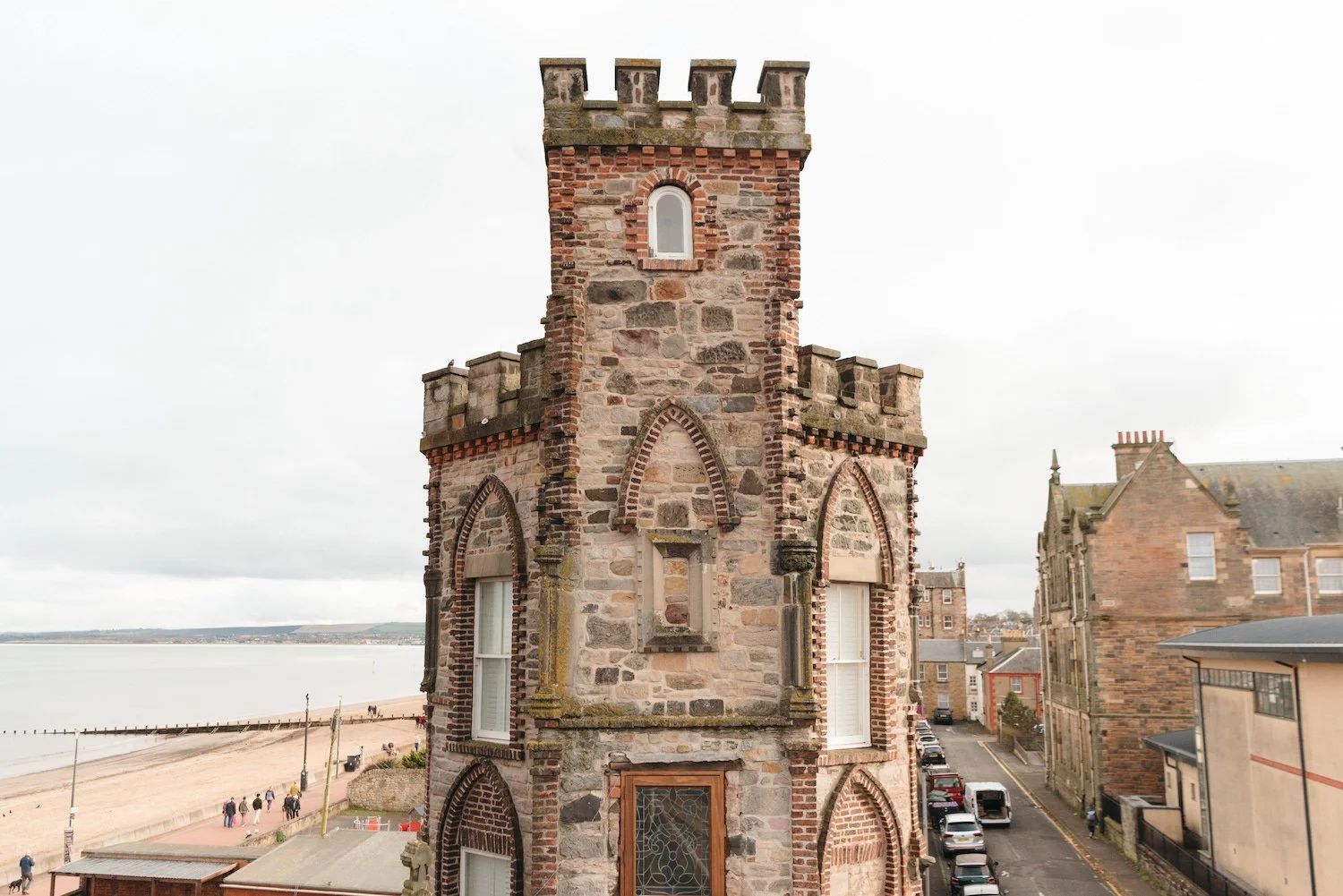
Tower House, a film location in Edinburgh.
The light is the real headline
If you take one practical thing from this piece, take this. From early spring through to late summer and into autumn, Scotland gives you daylight from around five in the morning until ten at night. Those are extraordinarily long shoot days.
For anyone who has ever watched a schedule collapse against a four o'clock winter sunset, the value of that is obvious. You get longevity through the day. You get misty mornings that do half the colourist's work before the unit has finished breakfast. And the sunrises and sunsets here are, simply stunning — not a marketing line, a logistical advantage, because golden hour that lasts is golden hour you can actually use.
The northern light has a quality DOPs talk about for a reason. It is softer, longer, and it bounces. On a textured stone wall it does things you cannot grade in afterwards.
On the weather, honestly
Yes, it rains. Let's not pretend otherwise. But it does not rain the way the flat grey systems of, say, the Low Countries rain. Scottish weather moves. It arrives, it does something dramatic, and it leaves, often inside an hour. We have pockets of microclimate that play by their own rules entirely — there is a reason the world's great golf courses cluster on this coastline, and it isn't the flatness.
For a production, fast-moving weather is workable weather. You can shoot around it, and frequently the front that threatened your morning hands you a far better sky by lunch. The trick is local knowledge — knowing which stretch of coast stays clear when the one ten miles west has clouded over. That knowledge is exactly what a good local liaison is for.
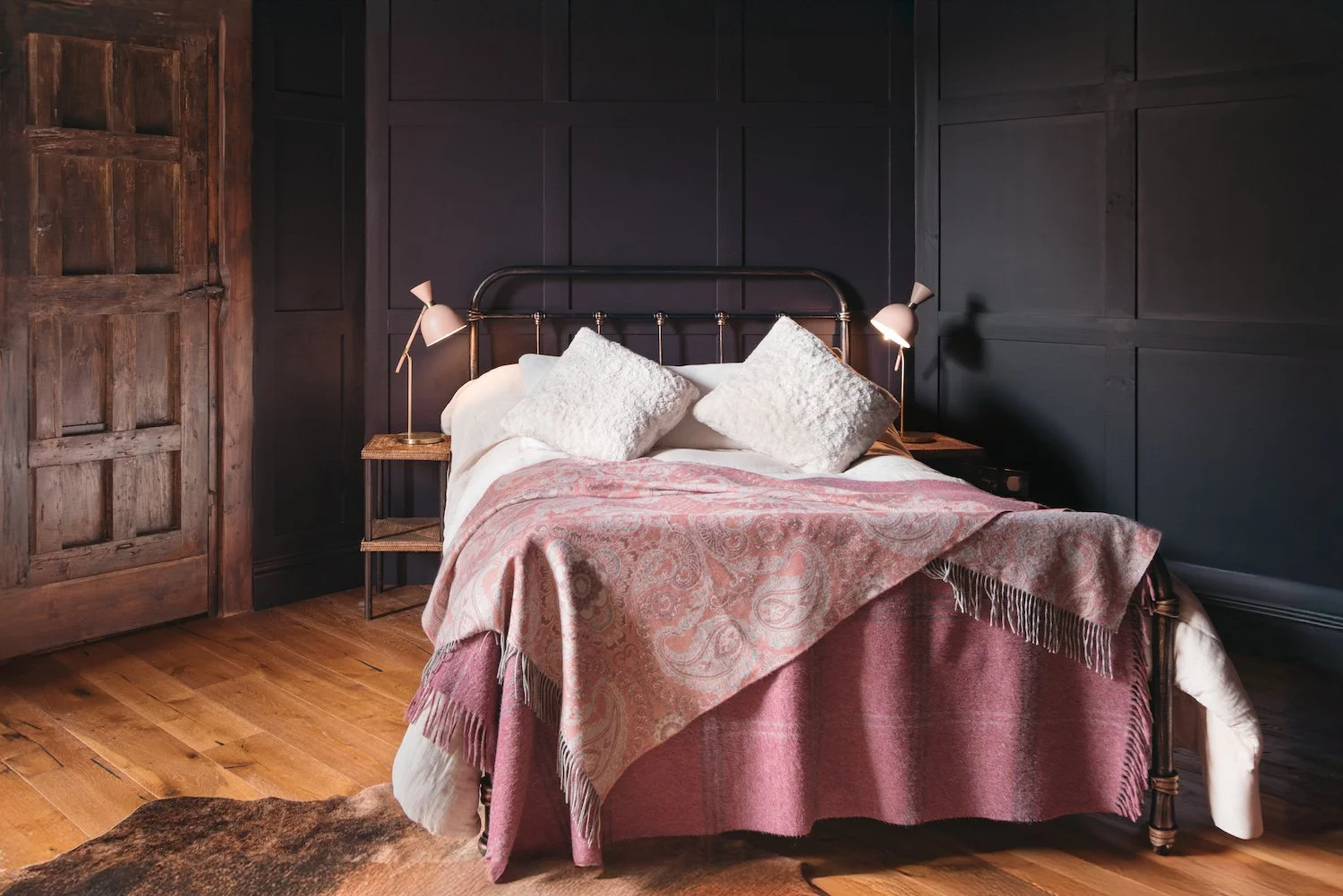
Tower House, a film location in Edinburgh.
The practical case
Strip away the romance of Scotland and the argument still holds. Range of landscape within a tight radius. Long usable daylight for two-thirds of the year. Weather that moves rather than settles. A deep breadth of crew, and locations — from stately piles to fishermen's cottages — that need little dressing to become somewhere else entirely.
Scotland rewards the productions that treat it as more than a backdrop. Come with one idea of the place and you'll leave having shot five. That is not a tourism slogan - it’s more of a love letter from a producer to a country that serves her very well!
Zahra Noble-Sabokbar is Silverstein Locations' liaison in Scotland and the Creative Director of a restored 1785 coastal Tower near Edinburgh. For Scottish location enquiries, or any enquiries across the UK, reach out below.